

Financial and tax planning are often treated as separate entities, but this approach can lead to missed opportunities and inefficiencies.
At Clear View Business Solutions, we believe in the power of integration when it comes to managing your finances and taxes.
By aligning these two crucial aspects of your financial life, you can maximize your wealth-building potential and minimize your tax burden.
This blog post will explore the strategies and benefits of integrating your financial and tax planning efforts.
Why Integrate Financial and Tax Planning?
The Power of Synergy
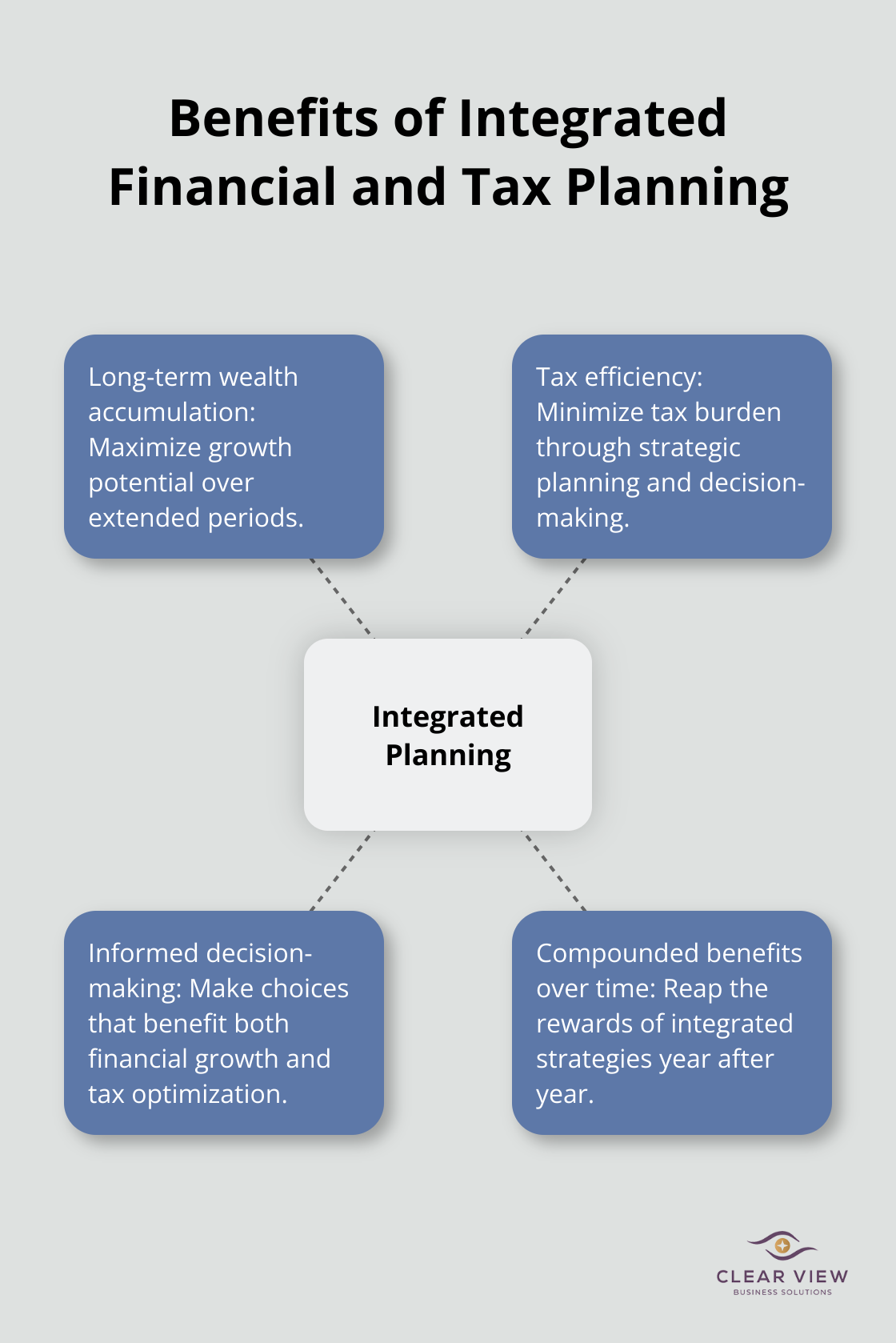
Financial and tax planning integration creates a 360-degree view of your financial landscape. This holistic approach enables decisions that benefit you now and in the future. For example, selecting investments that offer both strong returns and tax advantages can significantly boost your overall wealth accumulation.
Quantifiable Advantages
The benefits of integration extend beyond theory-they’re measurable. While specific figures may vary, integrated planning can potentially increase after-tax returns. Over a 30-year period, this could result in substantial additional wealth for investors.
Compounding Long-Term Effects
Integration sets up a system that works year after year. Considering both financial growth and tax implications allows for strategies that compound benefits over time. For instance, maximizing contributions to tax-advantaged retirement accounts while managing taxable investments can lead to substantial savings over decades.
Real-World Application
Many financial advisors (including those at Clear View Business Solutions) apply this integrated approach daily. For small business clients, advisors don’t just prepare taxes-they help structure businesses and financial decisions to minimize tax liability while maximizing growth potential. This might involve timing major purchases to coincide with tax incentives or structuring compensation in tax-efficient ways.
Tailored Strategies for Success
An integrated approach to financial and tax planning optimizes your current financial situation and paves the way for long-term financial success. It’s about making every dollar work harder for you, both in terms of growth and tax efficiency. As we move forward, we’ll explore specific strategies that can help you achieve this integration effectively.
How to Optimize Your Financial and Tax Strategies
At Clear View Business Solutions, we understand the importance of integrating financial and tax strategies to maximize benefits for our clients. This chapter explores key approaches to help individuals and businesses optimize their financial potential while minimizing tax burdens.
Strategic Investment Selection
Selecting investments requires consideration of both potential returns and tax implications. Municipal bonds often offer tax-free interest income, making them attractive for high-income earners in top tax brackets. Dividend-paying stocks can provide regular income but may have different tax treatments depending on whether they’re qualified or non-qualified dividends.
We recommend diversifying your portfolio not just for risk management, but also for tax efficiency. Spreading investments across various asset classes and account types allows better control of tax liability while pursuing growth.
The Importance of Timing
The timing of income recognition and expense realization significantly impacts your tax situation. For business owners, this might mean accelerating expenses into the current tax year or deferring income to the next, depending on projected tax brackets.
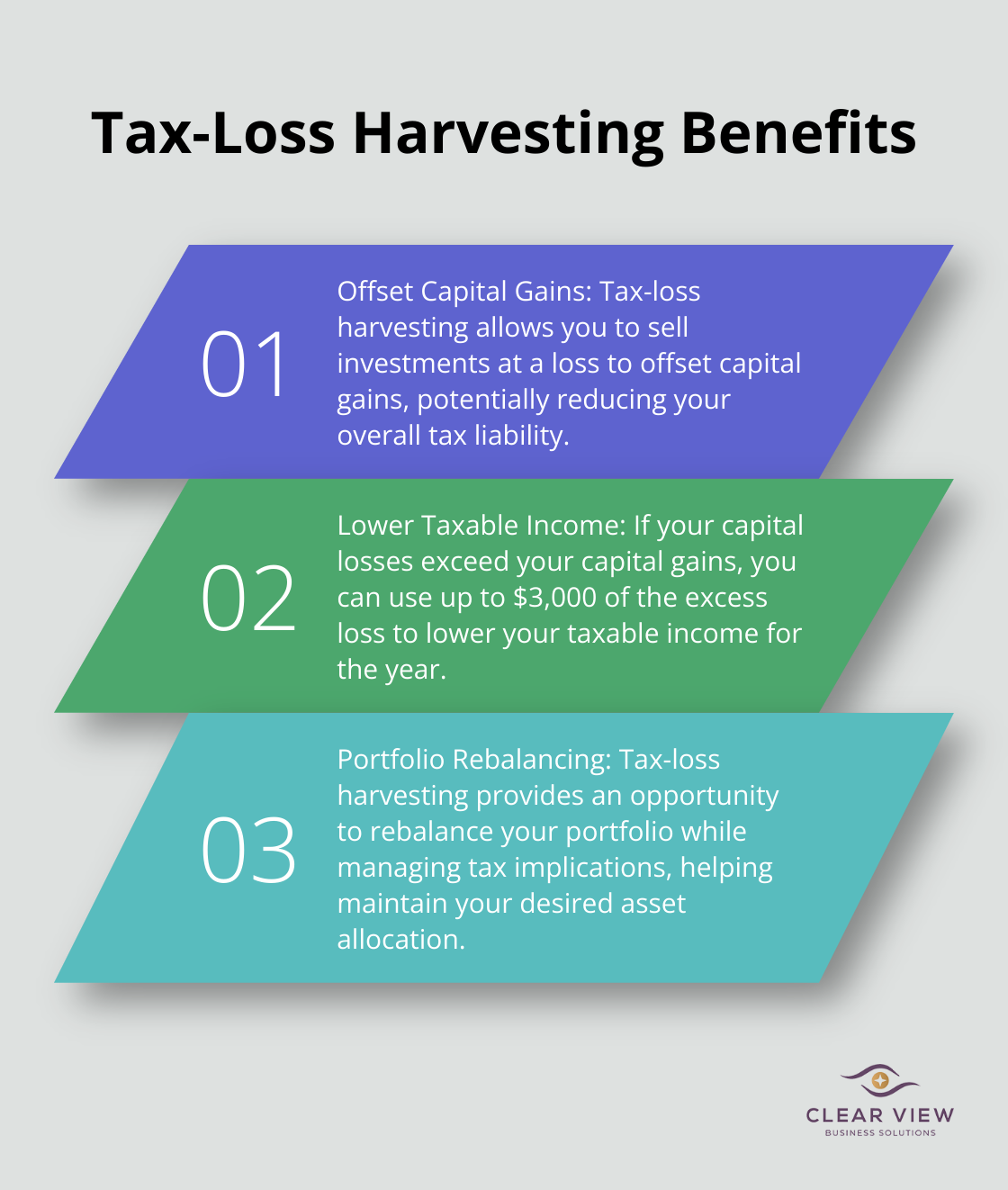
For individuals, strategies like tax-loss harvesting can prove powerful. This involves selling investments at a loss to offset capital gains, potentially reducing your tax bill. If your capital losses exceed your capital gains, you can claim up to $3,000 of the excess loss to lower your income. However, it’s important to be aware of wash sale rules and other IRS regulations when implementing such strategies.
Maximizing Tax-Advantaged Accounts
Utilizing tax-advantaged accounts forms a cornerstone of effective financial and tax planning. Traditional IRAs and 401(k)s offer immediate tax deductions and tax-deferred growth, while Roth versions provide tax-free withdrawals in retirement. For small business owners, SEP IRAs or Solo 401(k)s can allow for even higher contribution limits.
Health Savings Accounts (HSAs) offer another often-overlooked opportunity. They provide a triple tax advantage: tax-deductible contributions, tax-free growth, and tax-free withdrawals for qualified medical expenses. HSAs can also help you cover what may be your largest expense in retirement: health care.
Incorporating Estate Planning
Estate planning is an essential part of comprehensive financial planning for everyone (not just the wealthy). Strategies like setting up trusts can help protect assets and potentially reduce estate taxes. Gifting strategies, such as annual exclusion gifts, can also effectively transfer wealth while minimizing tax implications.
It’s important to regularly review and update your estate plan, especially in light of changing tax laws. The Tax Cuts and Jobs Act of 2017, for instance, significantly increased the federal estate tax exemption, but this provision is set to expire in 2025 unless extended by Congress.
Integrating these strategies requires a deep understanding of both financial markets and tax laws. The complexities involved underscore the value of working with experienced professionals. As we move forward, we’ll explore the challenges that often arise when implementing integrated financial and tax planning strategies, and discuss how to overcome them effectively.
Navigating the Complexities of Integrated Planning
The Challenge of Evolving Tax Laws
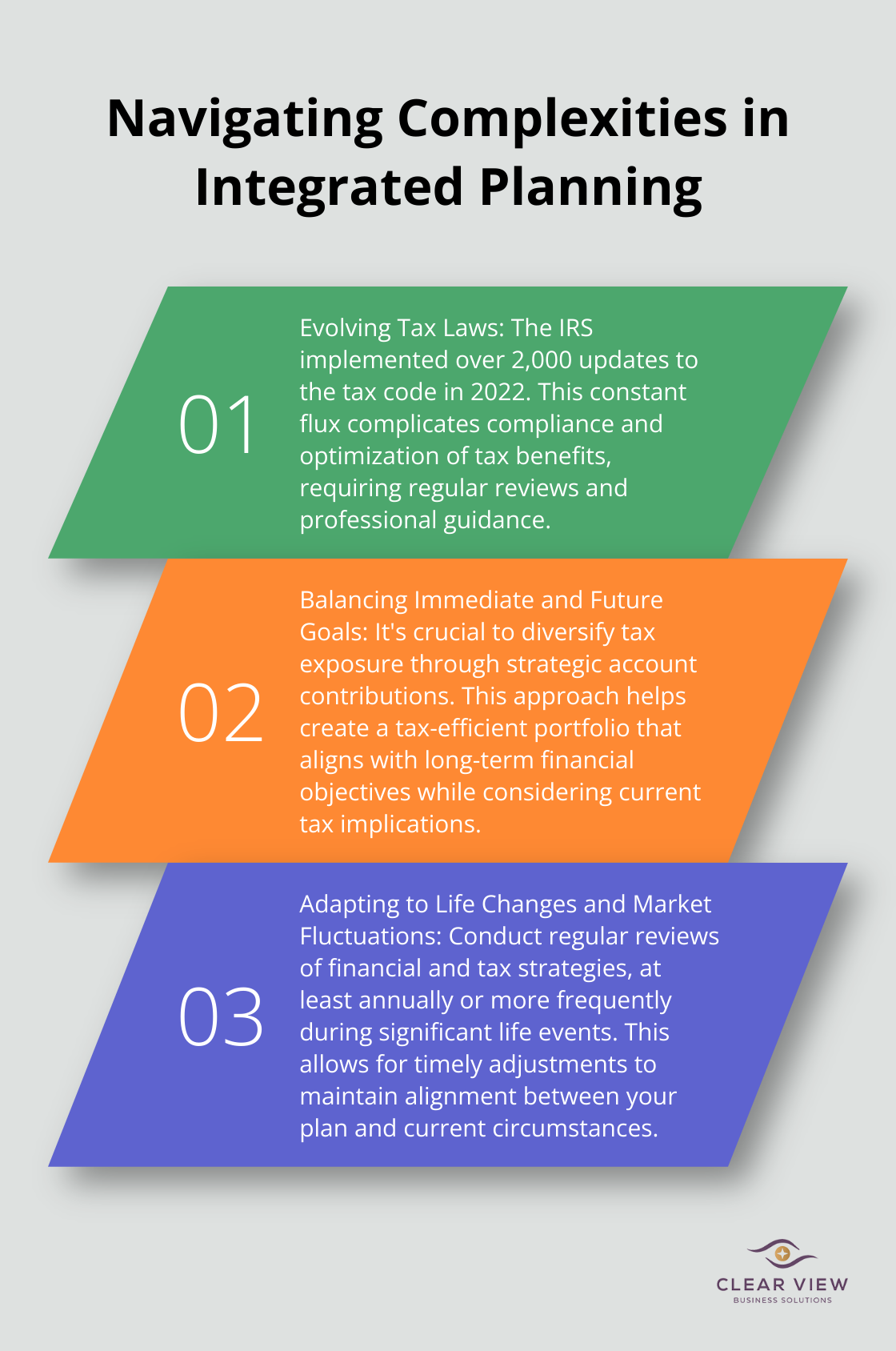
The U.S. tax code presents a formidable challenge due to its complexity and frequent changes. In 2022, the IRS implemented over 2,000 updates to the tax code. This constant flux complicates compliance and optimization of tax benefits for individuals and businesses alike.
To address this issue, we suggest the implementation of a systematic approach to tax law reviews. This could involve scheduled consultations with tax professionals or subscriptions to reliable tax law update services. The objective is to identify potential impacts on your financial strategy proactively, rather than reactively.
Striking a Balance Between Immediate and Future Goals
The allure of immediate tax savings often overshadows long-term financial growth considerations. For instance, maximizing contributions to a traditional 401(k) offers immediate tax advantages but may result in higher tax liabilities during retirement.
A more strategic approach involves the diversification of tax exposure. This strategy might include contributions to both traditional and Roth retirement accounts, or the strategic timing of capital gains realization. The aim is to create a tax-efficient portfolio that aligns with your long-term financial objectives.
Flexibility in the Face of Life Changes and Market Fluctuations
Life’s unpredictability demands adaptable financial planning. Significant life events (such as marriage, divorce, or the birth of a child) can substantially alter your tax situation. Similarly, market volatility can disrupt even the most meticulously crafted plans.
We advise our clients to conduct reviews of their financial and tax strategies at least annually, with more frequent assessments in the event of significant life changes. This regular re-evaluation allows for timely adjustments to maintain alignment between your plan and your current circumstances and market conditions.
The Value of Expert Guidance
Professional guidance proves invaluable in navigating these challenges. While DIY financial planning tools serve a purpose, they often fall short in integrating complex tax considerations with broader financial strategies. A skilled advisor can provide personalized insights, facilitating informed decisions that balance tax efficiency with overall financial goals.
Tailored Solutions for Complex Situations
Every individual and business has unique financial circumstances that require customized solutions. Generic advice often fails to address specific needs and may overlook opportunities for tax optimization. Professional advisors (like those at Clear View Business Solutions) can develop tailored strategies that account for your particular situation, goals, and risk tolerance.
Integrating tax considerations into your business planning can empower organizations to manage cash flow more effectively and align tax and financial strategies. This approach ensures that your tax and business strategies are aligned for success.
Final Thoughts
Financial and tax planning integration offers a powerful approach to wealth management and tax liability reduction. This strategy aligns crucial financial aspects, unlocks growth opportunities, and maximizes tax efficiency for long-term success. The benefits include increased after-tax returns, optimized investment decisions, and a comprehensive view of your financial landscape.
Professional guidance proves invaluable when navigating the complexities of integrated financial and tax planning. At Clear View Business Solutions, we provide comprehensive financial advisory and tax services for individuals and small businesses in Tucson. Our team of experts helps clients navigate these complexities while ensuring compliance and supporting financial growth.
We encourage you to take action and integrate your financial and tax planning strategies. This approach can significantly impact your financial future, whether you’re an individual optimizing personal finances or a small business owner aligning tax and business strategies. Seek professional advice and implement a holistic approach to set yourself on the path to greater financial stability and success.